
 Eyes
Eyes Face
Face Lips
Lips Nails
Nails Combos
 Makeup Kits
 Tools
Tools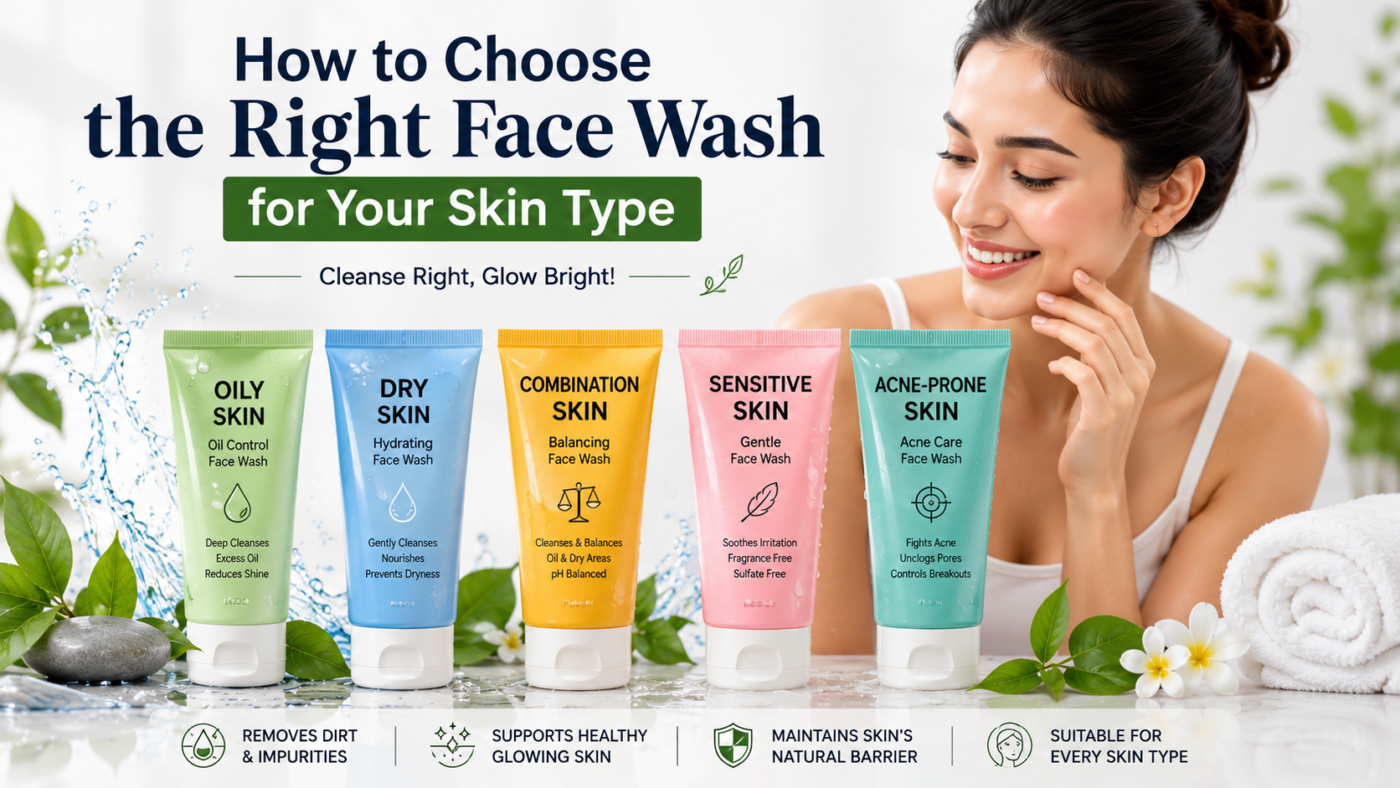
Jul
Choosing the right face wash may seem like a small step in your skincare routine, but it has a big impact on your skin’s health. A cleanser is the first product your skin comes into contact with every day, and using the wrong one can lead to dryness, irritation, excess oil, or frequent breakouts.
With hundreds of face washes available in the market, selecting the right one can feel overwhelming. Should you choose a foaming cleanser, a gel face wash, a cream cleanser, or a hydrating formula? The answer depends on one important factor—your skin type.
In this guide, you’ll learn how to identify your skin type, understand which ingredients work best, avoid common mistakes, and confidently choose the perfect face wash for healthy, glowing skin.
Why Choosing the Right Face Wash Is Important
Many people believe all face washes do the same job, but that’s far from true. Different cleansers are designed to address different skin concerns.
A suitable face wash helps the following:
- Remove dirt, oil, sweat, and pollution.
- Clean away makeup and sunscreen residue.
- Maintain your skin’s natural moisture barrier.
- Prevent clogged pores and acne.
- Prepare your skin for serums and moisturizers.
- Keep your complexion healthy and fresh.
On the other hand, using a cleanser that doesn’t suit your skin can strip away natural oils or leave behind excess oil and impurities, causing long-term skin concerns.
Step 1: Identify Your Skin Type
Before buying any skincare product, you need to understand your skin type.
Oily Skin
If your face becomes shiny within a few hours after washing, especially around the forehead, nose, and chin, you likely have oily skin.
Common Signs
- Excess oil production
- Enlarged pores
- Frequent blackheads
- Acne and pimples
- Makeup slides off quickly
Best Face Wash
Choose a lightweight gel or foaming cleanser that controls oil without over-drying your skin.
Recommended Ingredients
- Salicylic Acid
- Niacinamide
- Tea Tree Extract
- Zinc PCA
Dry Skin
Dry skin often feels tight, rough, or flaky after cleansing.
Common Signs
- Tightness after washing
- Dry patches
- Rough texture
- Dull appearance
- Fine lines become more noticeable
Best Face Wash
Look for cream-based or hydrating cleansers that replenish moisture while cleansing gently.
Recommended Ingredients
- Hyaluronic Acid
- Glycerin
- Ceramides
- Aloe Vera
Combination Skin
Combination skin has both oily and dry areas. Usually, the T-zone is oily, while the cheeks remain normal or dry.
Common Signs
- Oily forehead and nose
- Dry cheeks
- Occasional breakouts
- Uneven skin texture
Best Face Wash
Use a gentle pH-balanced cleanser that removes excess oil without drying the rest of your face.
Recommended Ingredients
- Niacinamide
- Green Tea Extract
- Mild Surfactants
Sensitive Skin
Sensitive skin reacts easily to skincare products and environmental changes.
Common Signs
- Redness
- Burning sensation
- Itching
- Irritation
- Easily inflamed skin
Best Face Wash
Choose fragrance-free and sulfate-free cleansers with calming ingredients.
Recommended Ingredients
- Centella Asiatica
- Aloe Vera
- Oat Extract
- Chamomile
Acne-Prone Skin
Acne-prone skin requires a cleanser that helps remove excess oil and unclog pores without damaging the skin barrier.
Common Signs
- Whiteheads
- Blackheads
- Pimples
- Clogged pores
- Post-acne marks
Best Face Wash
Choose products containing gentle acne-fighting ingredients while avoiding harsh formulas.
Recommended Ingredients
- Salicylic Acid
- Benzoyl Peroxide
- Niacinamide
- Zinc PCA
Step 2: Understand Face Wash Ingredients
The ingredients list tells you much more than the packaging ever will.
Salicylic Acid
Best for oily and acne-prone skin.
It penetrates deep into pores, removes excess oil, and helps reduce blackheads and breakouts.
Hyaluronic Acid
Best for dry and dehydrated skin.
This ingredient attracts moisture and helps keep your skin soft, smooth, and hydrated.
Niacinamide
Suitable for almost every skin type.
It balances oil production, reduces redness, minimizes pores, and strengthens the skin barrier.
Glycerin
A gentle moisturizing ingredient that prevents your skin from feeling tight after cleansing.
Ceramides
Ceramides repair and strengthen the skin’s natural protective barrier, making them ideal for dry and sensitive skin.
Tea Tree Extract
Known for its antibacterial properties, tea tree can help reduce acne-causing bacteria and excess oil.
Aloe Vera
A soothing ingredient that calms irritation while providing lightweight hydration.
Ingredients to Avoid
Not every ingredient is suitable for everyone. Depending on your skin’s needs, consider avoiding products with the following:
- High concentrations of sulfates that may leave skin feeling stripped.
- Strong alcohols that can increase dryness.
- Heavy artificial fragrances if your skin is easily irritated.
- Harsh physical scrubbing particles that may cause micro-tears.
- Cleansers with an excessively high pH that can disrupt the skin barrier.
Always patch-test a new product before using it regularly.
Best Face Wash Recommendations by Skin Type
For Oily Skin
Look for:
- Oil-control gel cleansers
- Non-comedogenic formulas
- Salicylic Acid-based face washes
For Dry Skin
Choose:
- Cream cleansers
- Hydrating formulas
- Ceramide-rich face washes
For Combination Skin
Pick:
- Gentle foaming cleansers
- pH-balanced face washes
- Lightweight gel cleansers
For Sensitive Skin
Choose:
- Fragrance-free cleansers
- Sulfate-free formulas
- Dermatologist-tested products
For Acne-Prone Skin
Look for:
- Salicylic Acid cleansers
- Benzoyl Peroxide cleansers (when appropriate)
- Oil-free, non-comedogenic formulas
Tip: If you’re shopping online, always read the ingredient list, product description, and customer reviews instead of buying based solely on attractive packaging or social media trends.
How Often Should You Wash Your Face?
Washing your face too often can damage your skin barrier, while washing too little can allow oil, dirt, and makeup to build up.
For most people:
- Wash your face twice a day—once in the morning and once before bed.
- Cleanse after heavy exercise or excessive sweating.
- Avoid washing your face more than three times daily unless advised by a dermatologist.
Common Mistakes When Choosing a Face Wash
Many people unknowingly make mistakes that prevent their skin from looking its best.
Buying Based on Advertisements
Marketing can be persuasive, but ingredients and suitability matter more than celebrity endorsements.
Ignoring Your Skin Type
A product that works well for someone else may not be right for you.
Choosing the Strongest Cleanser
A face wash that leaves your skin feeling “squeaky clean” may actually be removing too much of your natural moisture.
Switching Products Too Frequently
Give a new cleanser at least a few weeks unless it causes irritation. Your skin often needs time to adjust.
Skipping Moisturizer
Cleansing is only one step. Follow with a moisturizer suited to your skin type to help maintain hydration.
Extra Tips for Healthy, Glowing Skin
Healthy skin isn’t only about choosing the right cleanser. Your daily habits matter too.
- Drink enough water throughout the day.
- Apply sunscreen every morning.
- Moisturize after cleansing.
- Remove makeup before sleeping.
- Eat a balanced diet rich in fruits and vegetables.
- Get enough sleep each night.
- Avoid touching your face unnecessarily.
- Stay consistent with your skincare routine.
Small habits practiced consistently often deliver better long-term results than constantly changing products.
Frequently Asked Questions (FAQs)
Can I use the same face wash every day?
Yes. If it suits your skin type and doesn’t cause irritation or excessive dryness, using the same cleanser daily is recommended.
Which face wash is best for oily skin?
A gel-based cleanser with ingredients like salicylic acid or niacinamide is generally a good choice for oily skin.
Is a foaming face wash suitable for dry skin?
Some gentle foaming cleansers work well, but many people with dry skin prefer cream or hydrating cleansers that help retain moisture.
How do I know if my face wash isn't right for me?
If your skin becomes excessively dry, tight, itchy, red, or starts breaking out after using a new cleanser, it may not be the right match.
Should teenagers use a different face wash?
Teenagers often experience increased oil production, so a gentle cleanser designed for oily or acne-prone skin may be beneficial. However, the choice should still be based on individual skin type.
Are Korean face washes better?
Korean skincare products are known for gentle formulations and hydration-focused ingredients, but the best face wash is the one that matches your skin’s specific needs—regardless of where it’s made.
Conclusion
Finding the right face wash doesn’t have to be complicated. Once you understand your skin type and know which ingredients support your skin’s needs, choosing a cleanser becomes much easier.
Remember, healthy skin isn’t achieved by using the most expensive product—it’s achieved through consistency, gentle care, and products that suit your unique skin.
Whether you have oily, dry, combination, sensitive, or acne-prone skin, the right face wash can be the foundation of a simple and effective skincare routine. Take the time to read ingredient labels, avoid harsh formulas, and pair your cleanser with a moisturizer and sunscreen for the best results.
Ready to upgrade your skincare routine? Explore Firangn’s collection of face washes and skincare essentials to find products that match your skin type and support healthier, glowing skin every day.