
 Eyes
Eyes Face
Face Lips
Lips Nails
Nails Combos
 Makeup Kits
 Tools
ToolsUncategorised
Difference Between Setting Spray and Setting Powder: Complete Guide for Flawless Long-Lasting Makeup
May
Makeup is not just about applying foundation, concealer, blush, or lipstick anymore. In today’s beauty world, people want makeup that looks fresh, smooth, and long-lasting throughout the day. Whether you are attending a wedding, going to the office, creating content for social media, or simply stepping out in hot weather, keeping your makeup in place can be a challenge. This is where makeup setting products become extremely important.
Two of the most popular makeup finishing products are setting spray and setting powder. While both products are designed to improve makeup longevity, many people still get confused about their purpose, application methods, and benefits. Some think they do the same job, while others are unsure which product is better for oily skin, dry skin, or combination skin.
The truth is that setting spray and setting powder work differently and serve different purposes in a makeup routine. Understanding the difference between setting spray and setting powder can help you choose the right product for your skin type and makeup goals.
In this detailed guide, we will explain everything you need to know about setting spray vs setting powder, including how they work, their benefits, key differences, skin type recommendations, application tips, common mistakes, and expert makeup advice.
What Is Setting Spray?
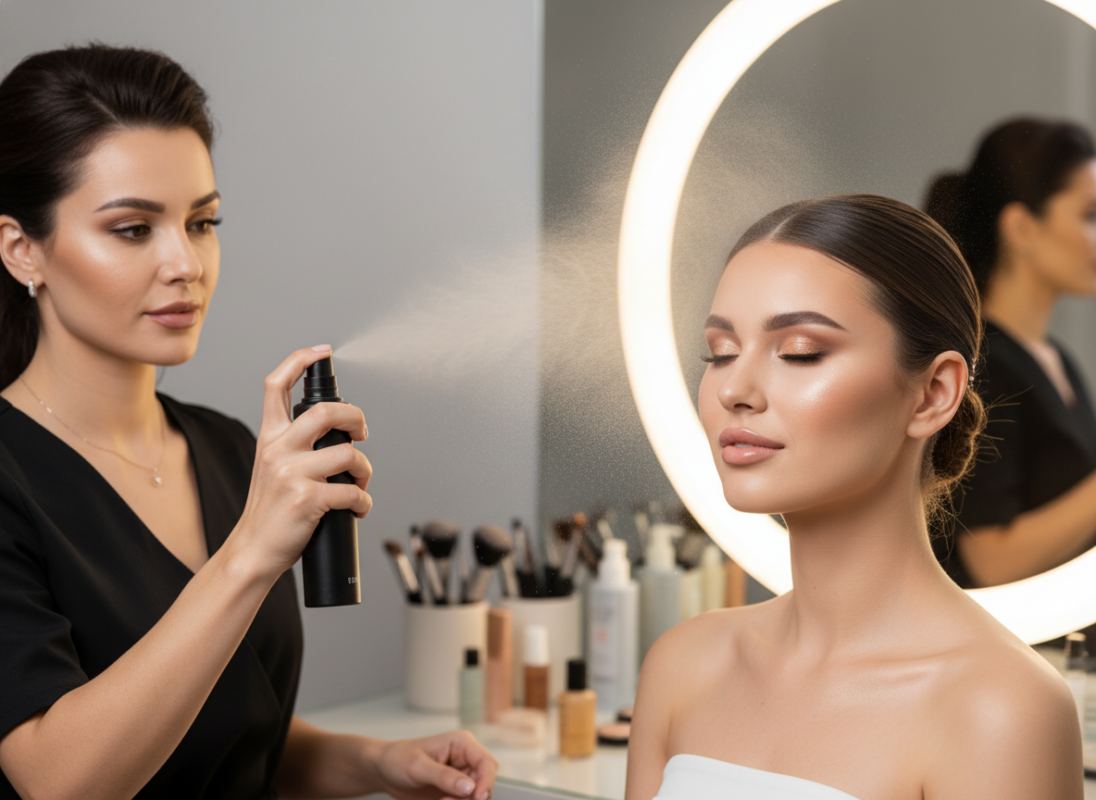
Setting spray is a lightweight liquid mist that is applied after completing makeup. It is designed to lock makeup into place and help it stay fresh for longer hours. Most setting sprays contain ingredients that form a protective barrier over the skin, reducing makeup melting, smudging, fading, and cracking throughout the day.
Setting sprays have become one of the most essential makeup products in recent years because they help makeup look more natural and skin-like. Unlike powder products, setting sprays blend all makeup layers together and remove the dry or cakey appearance often caused by heavy foundation or excessive powder application.
One of the biggest reasons why makeup artists love setting sprays is their ability to provide a smooth finish without making the skin look overly matte. Depending on the formula, setting sprays can offer different finishes such as dewy, radiant, matte, or natural.
Hydrating setting sprays are especially beneficial for people with dry skin because they add moisture and refresh the skin throughout the day. Matte setting sprays, on the other hand, are ideal for oily skin because they help reduce shine and control oil production.
Modern setting sprays also contain skincare ingredients such as hyaluronic acid, aloe vera, niacinamide, and vitamins, making them useful for both makeup and skin hydration.
What Is Setting Powder?
Setting powder is a finely milled cosmetic powder used to set liquid and cream makeup products like foundation and concealer. Its main purpose is to absorb excess oil, prevent creasing, and create a smooth makeup finish.
Setting powders are commonly available in loose powder and pressed powder forms. Loose setting powder usually gives a lighter and softer finish, while pressed powder offers convenience and stronger coverage for touch-ups.
One of the most important benefits of setting powder is oil control. People with oily skin often struggle with makeup breakdown, especially around the forehead, nose, and chin area. Setting powder helps absorb sebum and keeps the face looking matte for longer periods.
Another major benefit of setting powder is preventing creasing under the eyes. Concealer can settle into fine lines throughout the day, but applying a small amount of powder helps lock it into place.
Many translucent setting powders are designed to blur pores, smooth texture, and create an airbrushed appearance. This is why setting powder is often used in bridal makeup, professional makeup looks, and high-definition photography makeup.
However, excessive powder use can sometimes make the skin appear dry, heavy, or cakey, especially on dry or mature skin.
Difference Between Setting Spray and Setting Powder
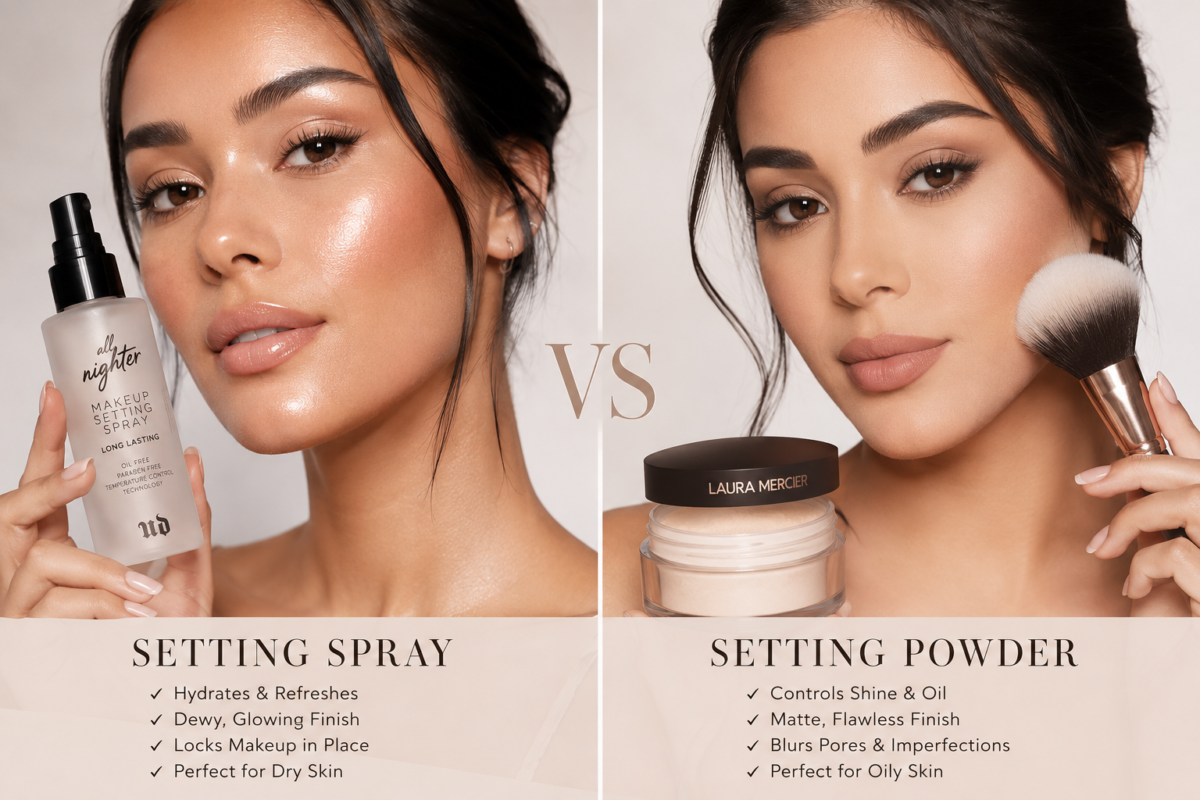
Although both products are designed to make makeup last longer, the difference between setting spray and setting powder lies in their formula, finish, texture, and purpose.
Setting spray is liquid-based and focuses mainly on locking makeup in place while maintaining a natural finish. It helps prevent makeup from melting due to sweat, humidity, or heat. Setting spray is often preferred by people who want glowing, fresh-looking skin.
Setting powder, in contrast, is specifically designed to absorb oil and reduce shine. It creates a matte finish and helps stop foundation and concealer from moving around the face. Powder is particularly useful for oily skin types and people who prefer full-coverage makeup.
Another major difference is the final makeup appearance. Setting spray usually gives a soft, hydrated, and skin-like finish, while setting powder creates a smooth matte effect.
Application methods also differ significantly. Setting spray is misted across the face, whereas setting powder is applied with a brush, puff, or makeup sponge.
The choice between setting spray vs setting powder often depends on your skin type, weather conditions, and desired makeup style.
Setting Spray vs Setting Powder for Oily Skin
People with oily skin often experience makeup melting, excessive shine, clogged pores, and patchy foundation throughout the day. In such cases, setting powder is usually the better option because it absorbs excess oil and controls shine effectively.
Loose translucent powder is especially popular for oily skin because it creates a matte barrier that prevents makeup breakdown. Many makeup artists recommend applying powder to the T-zone area, including the forehead, nose, and chin.
However, oily skin can also benefit from matte setting sprays. These sprays help reduce oiliness while adding extra makeup longevity. Using both setting powder and setting spray together often gives the best results for oily skin.
A common technique used by professional makeup artists involves setting the foundation with powder first and then applying setting spray afterward to remove the powdery appearance and lock everything in place.
Setting Spray vs Setting Powder for Dry Skin
Dry skin requires hydration and moisture, which is why setting spray is generally a better option for dry skin types.
Powder products can sometimes cling to dry patches and make flaky skin more visible. Excessive powder application may also make the face look dull and textured.
Hydrating setting sprays solve this problem by adding moisture and giving the skin a radiant glow. Dewy setting sprays are especially helpful because they refresh the skin and make makeup appear smoother and more natural.
People with dry skin should avoid overusing matte powders and instead focus on lightweight products with hydrating ingredients.
If powder is necessary, it should only be applied lightly to areas prone to creasing, such as under the eyes.
Can You Use Setting Spray and Setting Powder Together?
Yes, absolutely. In fact, combining setting spray and setting powder is one of the most effective ways to achieve long-lasting makeup.
Professional makeup artists often use both products because they complement each other perfectly. Setting powder controls oil and prevents creasing, while setting spray locks makeup in place and improves the overall finish.
The best way to layer these products is by applying powder first after foundation and concealer. Once the makeup is fully set, a light mist of setting spray should be sprayed across the face.
This method helps create makeup that looks smooth, natural, and long-lasting without becoming too dry or too shiny.
Using both products together is especially beneficial for weddings, parties, photoshoots, summer events, and long workdays.
Common Mistakes People Make with Setting Products
Many people use setting spray and setting powder incorrectly, which can ruin the makeup finish.
One of the most common mistakes is applying too much setting powder. Excessive powder creates a cakey appearance and can make the skin look older and drier.
Another mistake is choosing the wrong formula for your skin type. Matte powders may not suit dry skin, while hydrating sprays may not provide enough oil control for oily skin.
Applying setting spray too closely to the face is also problematic because it can create water spots or uneven makeup texture.
Skipping skincare preparation is another major issue. Even the best setting products cannot perform properly if the skin is dehydrated or poorly prepped.
Proper cleansing, moisturizing, and priming are essential before makeup application.
Expert Tips for Long-Lasting Makeup
If you want your makeup to last all day without fading, several professional techniques can help.
First, always prepare the skin properly using moisturizer and primer. Healthy skin creates a better base for makeup products.
Second, apply makeup in thin layers rather than thick heavy layers. Thin layers blend more naturally and last longer.
Third, use powder strategically instead of applying it all over the face. Focus only on oily areas where makeup tends to break down.
Fourth, finish your makeup routine with a quality setting spray to seal everything together.
Lastly, avoid touching your face throughout the day because oils from your hands can break down makeup quickly.
Which Is Better: Setting Spray or Setting Powder?
The answer depends entirely on your skin type, makeup preference, and lifestyle.
If you want radiant, fresh, and natural-looking makeup, setting spray is usually the better option. It works especially well for dry skin, lightweight makeup looks, and people who prefer a glowing finish.
If you struggle with oiliness, shine, and makeup creasing, setting powder is more effective because it controls sebum and keeps the skin matte.
For people who wear makeup for long hours, attend events, or live in humid climates, using both products together often delivers the best results.
There is no universal winner in the setting spray vs setting powder debate because both products serve unique purposes in a beauty routine.
Final Thoughts
Understanding the difference between setting spray and setting powder is essential for achieving flawless and long-lasting makeup. Although both products are designed to improve makeup wear time, they work differently and provide different finishes.
Setting powder is ideal for controlling oil, reducing shine, and preventing creasing, making it perfect for oily skin and full-coverage makeup looks. Setting spray, on the other hand, helps lock makeup in place while maintaining a natural, hydrated, and fresh appearance.
Choosing the right product depends on your skin type, climate, and makeup goals. Many makeup expects recommend using both products together to achieve the perfect balance between longevity, oil control, and natural finish.
whether you prefer matte skin, glowing makeup, or all-day wear, adding the right setting products to your makeup routine can completely transform your final look and help your makeup stay flawless for hours.