
 Eyes
Eyes Face
Face Lips
Lips Nails
Nails Combos
 Makeup Kits
 Tools
Tools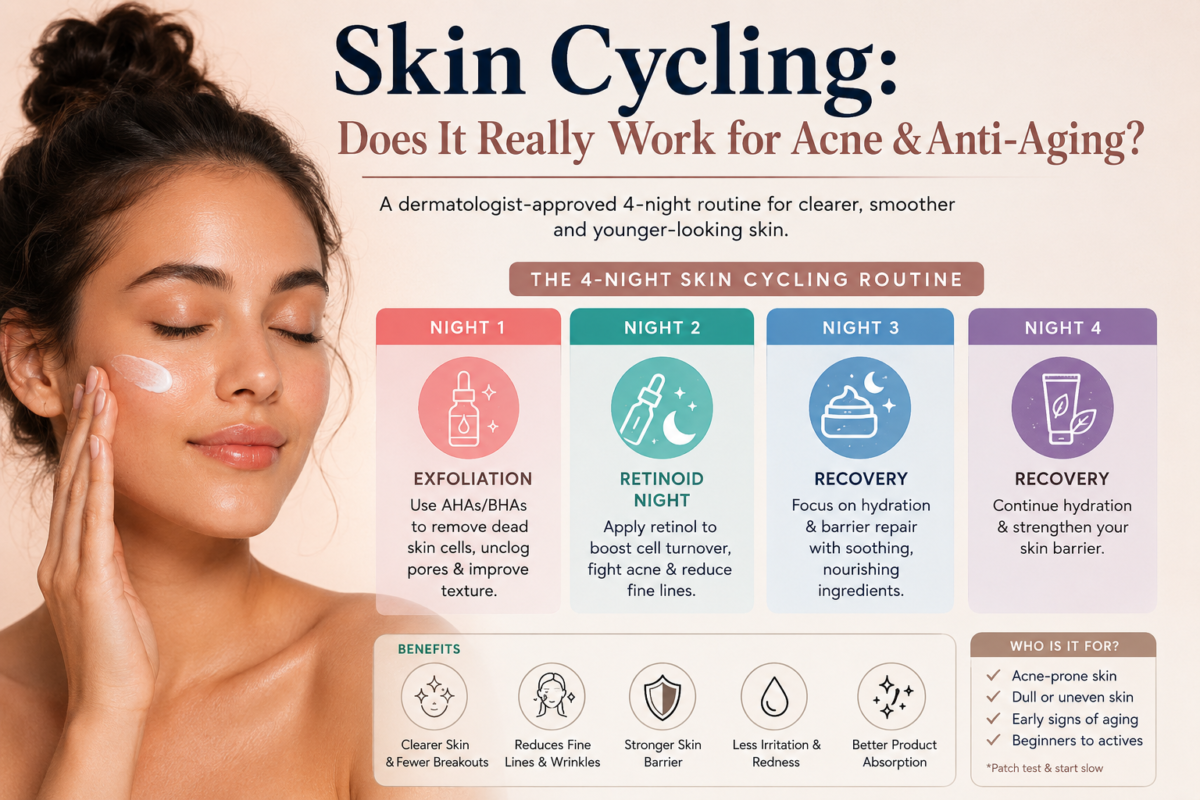
May
In recent years, skin cycling has become one of the most talked-about skincare trends in the beauty industry. From social media platforms to dermatologist recommendations, people everywhere are searching for answers about whether a skin cycling routine can actually improve acne, reduce fine lines, and create healthier-looking skin. Many skincare enthusiasts are now replacing complicated routines with this simple yet effective method. But the real question remains—does skin cycling really work for acne and anti-aging? In this complete guide, we will explore the science, benefits, routine, and results of skin cycling while helping you understand whether this skincare method is right for your skin.
What Is Skin Cycling?
Skin cycling is a structured nighttime skincare routine that involves rotating active ingredients over several nights to maximize results while minimizing irritation. This skincare method was popularized by Whitney Bowe, who introduced the concept as a smarter way to use powerful skincare ingredients. Instead of applying exfoliating acids, retinol, and treatment products every night, a skin cycling skincare routine allows your skin to recover between active treatments. This balanced approach helps improve skin texture, strengthen the skin barrier, and make active ingredients more effective.
How Does a Skin Cycling Routine Work?

A standard skin cycling routine usually follows a four-night cycle, with each night focusing on a specific skincare goal. The first night is dedicated to exfoliation, the second night focuses on retinoids, and the remaining nights are reserved for skin recovery and hydration. This strategic rotation allows your skin to benefit from active ingredients without experiencing excessive dryness, irritation, or sensitivity. By following a proper dermatologist skin-cycling method, users can create a routine that supports both acne treatment and anti-aging goals.
Skin Cycling for Acne: Does Skin Cycling Work for Acne?
One of the biggest reasons people try skin cycling for acne is its ability to target clogged pores, excess oil, and breakouts. During exfoliation night, ingredients such as salicylic acid or glycolic acid help remove dead skin cells, unclog pores, and reduce blackheads. On retinoid night, retinol helps speed up skin cell turnover, reduce inflammation, and prevent future acne breakouts. Recovery nights allow the skin barrier to repair itself, reducing redness and irritation that often occur when acne treatments are overused.
For people with oily skin, combination skin, or acne-prone skin, a consistent skin cycling routine for acne may lead to clearer skin, fewer breakouts, and smoother texture over time. While results vary, many users notice visible improvement after several weeks of consistent use.
Skin Cycling for Anti-Aging: Can Skin Cycling Reduce Fine Lines and Wrinkles?
Another major reason people adopt skin cycling for anti-aging is the long-term benefit it offers for mature skin. Retinoids, used during the second night of the cycle, are widely known for boosting collagen production, improving skin elasticity, and reducing the appearance of fine lines and wrinkles. Exfoliation also plays an important role by removing dull surface cells and revealing brighter, fresher skin underneath.
When followed consistently, a skin cycling anti-aging routine can help improve uneven skin tone, sun damage, rough texture, and early signs of aging. Recovery nights are equally important because hydrated skin naturally appears plumper, smoother, and more youthful.
Benefits of a Skin Cycling Skincare Routine
One of the main reasons skin cycling skincare routines are becoming so popular is their ability to deliver powerful results without overwhelming the skin. Unlike aggressive skincare routines that use active ingredients every night, skin cycling creates a balanced system that supports long-term skin health.
A proper skin cycling routine may help reduce acne breakouts, improve skin texture, minimize irritation, strengthen the skin barrier, increase hydration, and reduce visible signs of aging. Because the routine includes recovery nights, it is especially helpful for beginners who want to introduce retinol or exfoliating acids into their skincare regimen safely.
Possible Side Effects of Skin Cycling
Although skin cycling works well for many skin types, some users may experience temporary side effects during the adjustment period. Common reactions include mild dryness, peeling, redness, or temporary purging, especially when introducing retinol for the first time. These effects usually improve as the skin adapts to the routine.
To minimize irritation during your skin cycling routine, it is important to start with gentle products, avoid over-exfoliation, and always use a high-quality moisturizer during recovery nights.
Who Should Try Skin Cycling?
Skin cycling can be beneficial for many people, especially those dealing with acne, uneven skin texture, fine lines, or sensitive skin caused by overusing active ingredients. Beginners who are new to retinol or chemical exfoliants often find a skin cycling skincare routine easier to follow compared to traditional daily treatment routines.
However, people with severe eczema, rosacea, or extremely sensitive skin should consult a skincare professional before starting a new routine.
How Long Does Skin Cycling Take to Show Results?
One of the most common questions about skin cycling is how long it takes to see visible improvements. While every skin type responds differently, many people notice smoother skin and improved hydration within two to four weeks. More significant improvements in acne, pigmentation, fine lines, and overall skin texture typically appear after eight to twelve weeks of consistent use.
Patience and consistency are essential when following a skin cycling routine for acne and anti-aging, as skin renewal naturally takes time.
Expert Tips for Better Skin Cycling Results
To get the best results from your skin cycling routine, always patch test new products before applying them to your entire face. Start with low-strength retinol if you are a beginner, and avoid combining multiple active ingredients on the same night. Recovery nights should focus on hydration using ingredients such as hyaluronic acid, ceramides, and niacinamide. Most importantly, daily sunscreen is essential, as exfoliation and retinol can make your skin more sensitive to sun exposure.
Final Verdict: Does Skin Cycling Really Work for Acne & Anti-Aging?
So, does skin cycling really work for acne and anti-aging? For most people, the answer is yes. A well-planned skin cycling routine can help reduce acne breakouts, improve skin texture, strengthen the skin barrier, and support long-term anti-aging benefits. By combining exfoliation, retinoids, and recovery nights in a structured way, skin cycling offers a practical and dermatologist-inspired approach to healthier skin.
If you are looking for a simple, effective, and beginner-friendly skincare method, skin cycling for acne and anti-aging may be the perfect addition to your skincare journey.